Without leaving the area, I wandered around the shore and trail getting fresh insights depending on where your attention rests. A few steps in either direction changes the conversation entirely, be it water giving way to brush or open light folding into shadow. Just inland from the bay, near the Jamestown Glasshouse, the landscape feels layered rather than singular, as though land and water are quietly negotiating their boundaries rather than enforcing them.
From this vantage, the shoreline no longer reads as a simple edge. It becomes a meeting point, where erosion, growth, and seasonal change leave visible traces. Stones gather where they will, leaves settle where the wind steers them, and branches reach across the frame with no regard for an artist’s composition. The scene resists neatness, offering instead a kind of honest arrangement shaped by time and repetition rather than intention.
Turn slightly away from the water and the world tightens. The openness gives way to watchfulness, and the tranquility transitions to attention. The same patience that smooths the bank now sharpens the woods, where movement is brief and easily missed, and every pause feels deliberate. Taken together, these images reflect that shared space, one where stillness and vigilance coexist, and where observation is rewarded not with spectacle, but with presence.
If you see any images here that aren’t available on Natural Desygns or SM Desygns reach out to me through the Etsy store and I’ll add the image to the correct store. In the meantime, click any of the images to head over to DeviantArt to get a better look.
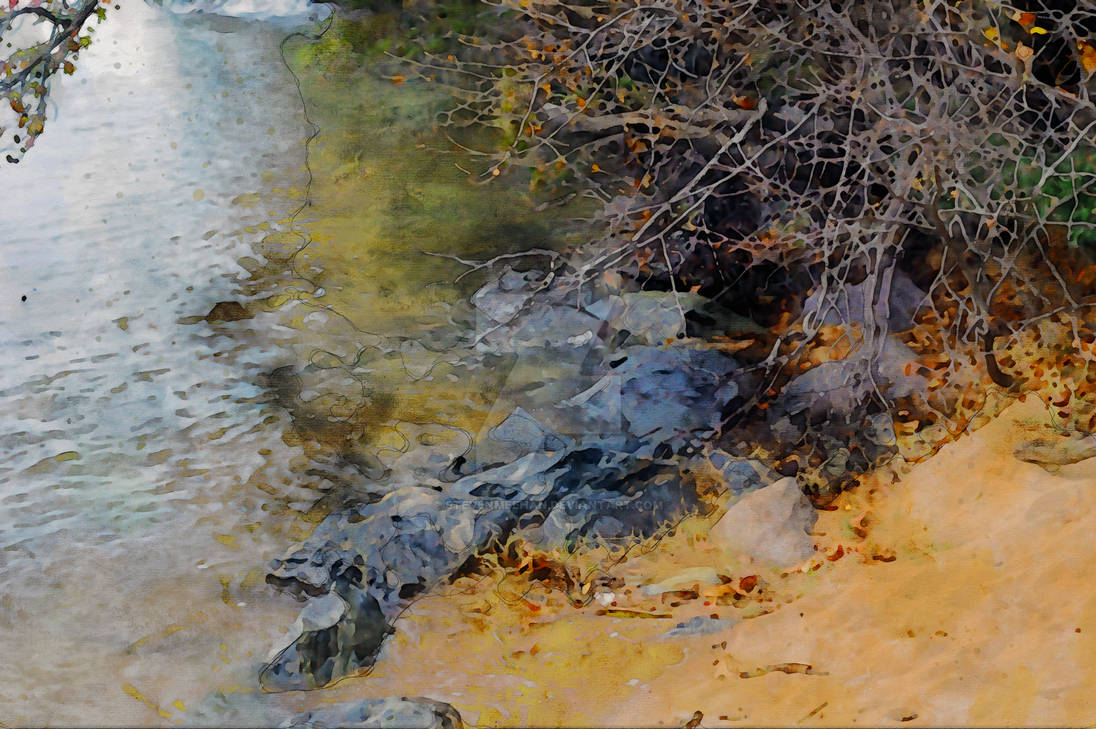
Despite the deliberate nature of the shoreline, this composition hints at the wild nature hiding just under the surface. Those signs hide in the rocks clustered at the bank’s edge, half-submerged by the cool ripples and the reflection of the sky in the water. Then there are the leaves, sun baked and salt-worn. The two create a warm contrast, filling the right side of the composition with ochres and rusts that speak of late-autumn decay. Bare branches splinter across the scene like charcoal against canvas, adding a sketch-like tension that draws the eye back and forth across land and water.
There’s an almost tactile quality to the watercolor effect here, as though the sea spray, earth, and stone have blurred their borders entirely. Each hue bleeds into the next with whispered insistence. Though the setting appears humble at first glance, it holds the sort of effortless poetry that comes from nature’s own design. If you close your eyes with this image entrenched in your mind, can you imagine the faint crunch of pebbles underfoot, or the hush of wind twisting around the branches?
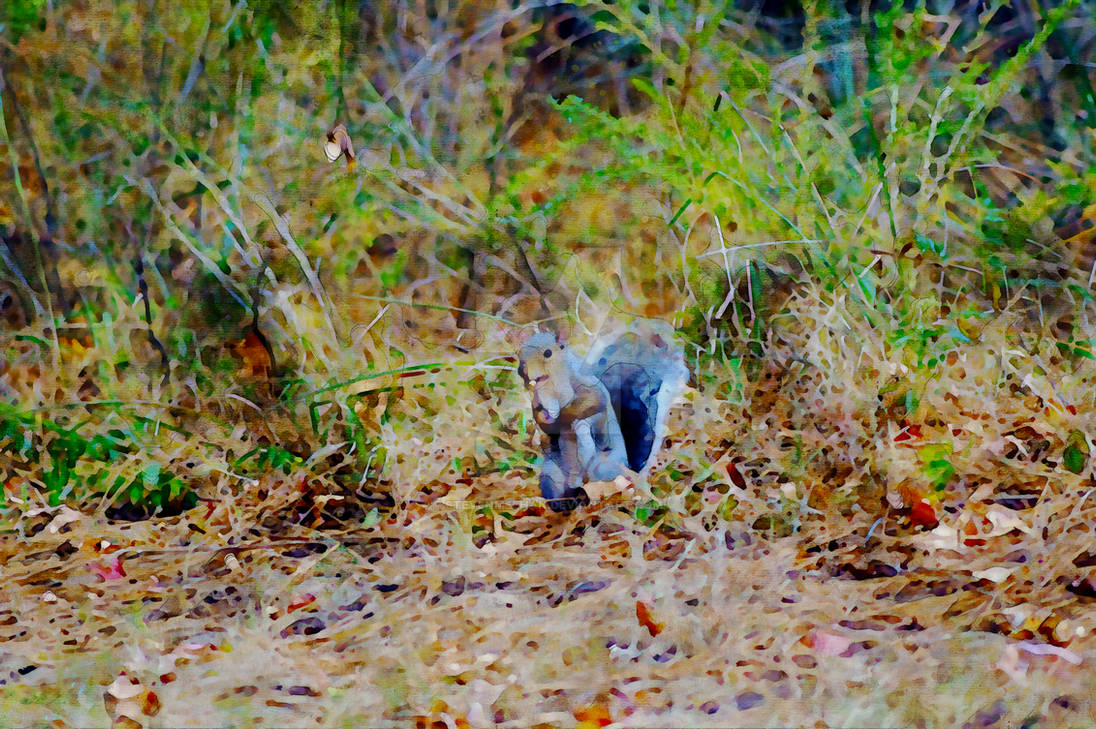
In a moment of accidental discovery, I found a gray squirrel hunched and watching over its territory, amid the dried leaves and tangled undergrowth. His posture is alert, as though he’s just realized he’s being watched by a potential threat. He is cautious yet curious. The golden floor of cracked leaves and wild grasses creates a mottled camouflage that could swallow him once he drops down to all fours. But he is insistent on waiting to complete his mission, as though he ignores the mounting sense of being studied.
The watercolor style transforms the woods into a shimmering tapestry of color, dabs of bronze, hunter green, and soft shadows vying for attention. Removed from the crispness of reality and pure photography, the creature takes on a half-mythic quality, like a spirit of the woods rather than a common squirrel. For anyone who has ever paused mid-hike and caught a sudden flicker of movement in the brush, the posture is immediately recognizable, and quietly magical.